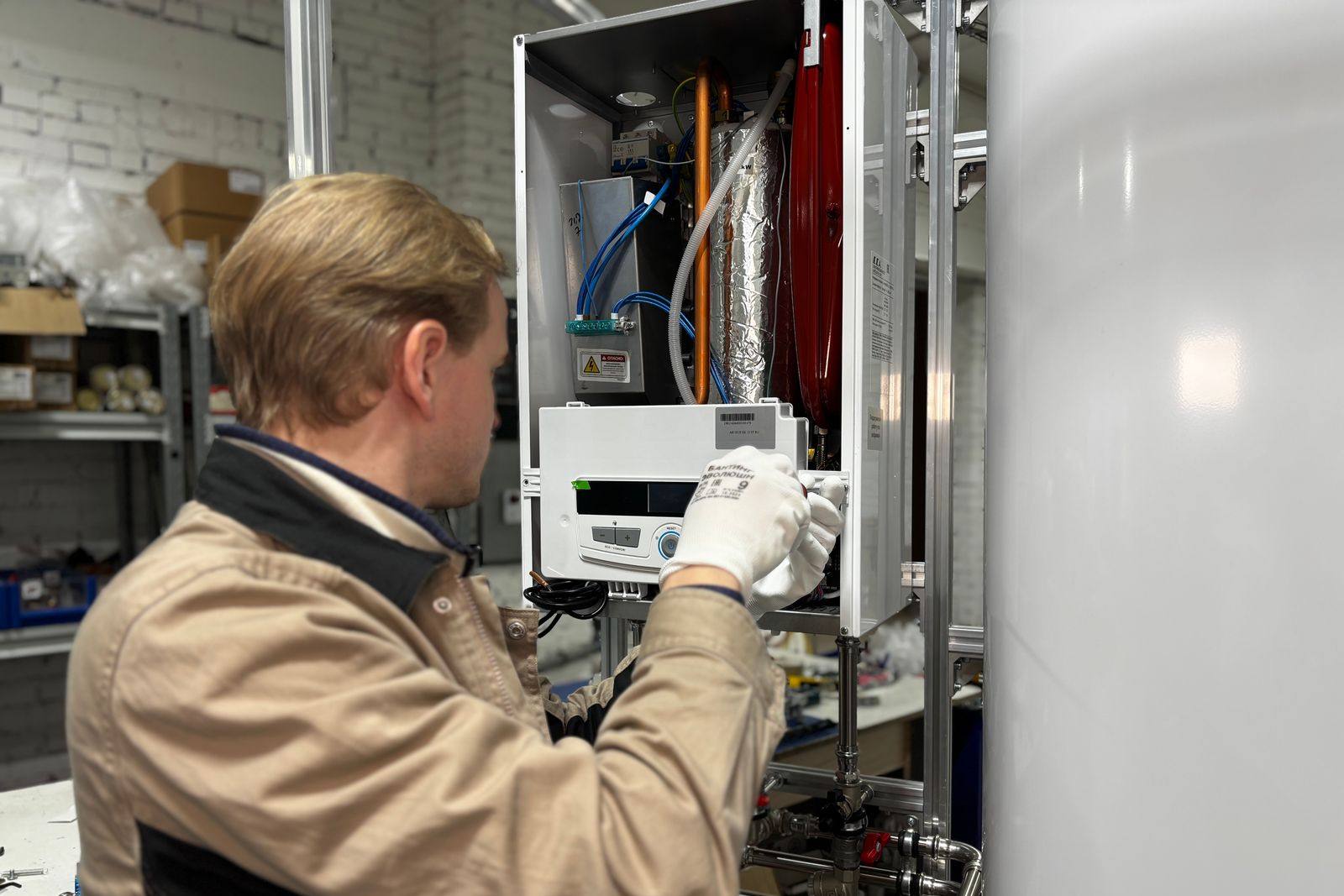
Water heater repair across San Francisco
San Francisco is a city of steep hills, fog, and old houses — Victorian and Edwardian flats, mid-century homes, and modern condos — and its water heaters live in some of the tightest spaces in the country: small closets, garages, and basements. Summers here are cool and foggy rather than hot, winters are mild and rarely freeze, and the ground itself is the main risk: California code requires water heaters to be strapped and braced against earthquakes, and in this city that is not a formality. A heater that is not secured can topple, break a gas line, and flood a home.
No hot water this morning, a leak spreading across the floor, or a heater that keeps rumbling? Start with the symptom below — each one points to the likely cause, and to whether it is usually a repair or a replacement. Repair requests are accepted in all 31 San Francisco ZIP codes where coverage is verified: 94102, 94103, 94104, 94105, 94107, 94108, 94109, 94110, 94111, 94112, 94114, 94115, 94116, 94117, 94118, 94121, 94122, 94123, 94124, 94127, 94128, 94129, 94130, 94131, 94132, 94133, 94134, 94142, 94143, 94158, and 94188. Requests from these ZIP codes are shared with independent local water heater providers.
Common water heater problems in San Francisco
No hot water at all
On a gas heater, the usual causes are a pilot light that will not stay lit, a failed thermocouple or gas control valve, or a tripped safety device. On an electric heater, the usual causes are a failed heating element or thermostat, or a tripped breaker. A provider diagnoses which component failed before replacing anything, because the symptom alone does not identify the part.
Not enough hot water
A heater that runs out too quickly is less often a sediment problem in San Francisco — the water here is soft, so mineral build-up is slow. More often the cause is a thermostat set too low, or the heater is simply undersized for the household's simultaneous hot-water use. A broken dip tube — the pipe that sends cold water to the bottom of the tank — produces the same symptom, as does a failing lower element on an electric unit. Flushing the tank and checking the anode rod are part of the diagnosis.
Leaking water heater
Water pooling around the base of a tank is serious. Leaks from the temperature-and-pressure relief valve, the drain valve, or a pipe fitting can often be repaired. A leak from the tank body itself usually cannot be: once a steel tank rusts through, replacement is the only reliable fix. If you see water spreading, turn off the water supply to the heater, turn off the gas or power, and request assistance.
Rumbling, popping, or banging noises
These sounds are almost always sediment. Mineral deposits harden into a layer at the bottom of the tank; when the burner fires, steam bubbles force their way through the sediment and make the popping sound homeowners describe. Flushing can help if the sediment has not hardened, but heavy build-up sometimes cannot be fully removed — which is why annual flushing matters here more than in soft-water cities.
Rusty or smelly hot water
Rust-coloured hot water that clears after running usually points to a failing anode rod or internal tank corrosion. A rotten-egg smell in hot water only (not cold) is typically caused by bacteria reacting with the anode rod in the tank. Both problems are diagnosed at the heater, not at the water main.
Gas, electric, and tankless — the repair is different
Gas and electric heaters share symptoms but not causes. A gas heater's pilot, thermocouple, burner, and gas valve have no equivalent in an electric unit, and an electric unit's elements and thermostats have no equivalent in a gas unit. Tankless heaters are different again: their common failures are scale build-up on the heat exchanger, ignition and sensor faults, and error codes that require the manufacturer's diagnostic sequence. A repair request should always say which type of heater you have, and roughly how old it is.
What a repair visit involves
A provider typically inspects the heater and its connections, tests the burner or elements, checks the thermostat settings, the relief valve, and the venting or flue, and looks for signs of corrosion or sediment. After diagnosis, the provider explains the fault, the options — repair or replace — and the price before doing the work. Replacement is recommended when the tank is leaking, when the unit is past its expected life and needs a major part, or when the repair would cost a large share of a new unit.
San Francisco homes and their heaters
Housing here spans Victorian and Edwardian flats in the older neighborhoods, mid-century homes on the west side, and condos downtown and in SoMa. Many heaters sit in a closet or a garage with little room to work around them, and in flats the heater often shares a small space with the laundry. Gas heaters need proper venting and seismic strapping; electric heaters need a panel that can carry them. The home's era and the heater's spot decide what a repair should look for — and in a flat, access alone can shape the job.
Frequently Asked Questions
How do I know if my water heater needs repair or replacement?
Repair is usually right for a newer heater with a single failed part — a thermostat, element, thermocouple, or valve. Replacement is usually right when the tank leaks, the heater is 10–12 years old or more and needs a major repair, or repairs keep repeating.
My water heater makes a popping noise. Is that dangerous?
It is usually sediment, not an immediate danger, but it means the heater is working harder than it should and its life is shortening. Have it flushed and inspected rather than waiting for it to fail.
How long does a repair take?
Many single-part repairs are completed in one visit. Diagnosis time depends on the fault; the provider who responds to your request can give a better estimate once the problem is described.